Acoustic / Soundproofing Foam
Acoustic foam panels help reduce echo and reverberation inside a room. Sonex and Phonik tiles suit studios, home theatres and offices, while Phonik sheets and convoluted foam cover larger surfaces. For a flat panel in a custom size, N29-400 is a very firm open cell foam that we can cut to your dimensions. Compare thicknesses, shapes and product details below to find an option for your wall or ceiling. Acoustic foam treats sound in the room; it does not block noise travelling through walls.
Customise cushions, bedding and more with our online custom foam tool. Easy ordering online - delivered Australia-wide. Try our foam calculator.
Frequently Asked Questions
No. Acoustic panels absorb sound inside the room, reducing echo and reverberation and helping speech and recordings sound clearer. They do not stop noise passing through walls, floors or ceilings. To keep sound in or out, you need building materials such as insulation, mass-loaded barriers or double-lined walls. Foam panels then treat the room itself, which is where many home studios and theatres need help.
Sonex or Phonik tiles suit a home studio. Their wedge profiles help treat first reflection points opposite the speakers, and you can add more panels where you still hear flutter. Sonex comes in 38, 50 or 75mm thicknesses and is sold in pairs. Phonik tiles are 50mm thick and come in packs of 12. You can also treat corners as part of the room’s acoustic setup.
It depends on the product. Sonex tiles come in 38, 50 or 75mm. Phonik tiles and sheets are 50mm. The convoluted sheet is 50mm at its peak and 25mm in the valley. N29-400 comes in standard thicknesses of 12, 25, 50, 75, 100, 125, 150, 175 and 200mm. Product records do not publish absorption figures by thickness, so call us if you are matching a design specification.
The product listings identify Sonex as N28-180 CM2 and fire retardant, Phonik as FR23-130 fire retardant, and the convoluted sheet as CM2. N29-400 has no fire rating. If your project needs test certificates or documentation for building approval, ask us for the information available for the specific product before you order.
Use clips or an adhesive compatible with the foam and the wall surface. Check the adhesive product details for suitable substrates and follow its instructions. Sonex and Phonik can also be bonded to a separate backing board to make hanging baffles or free-standing screens. This can help when you cannot attach panels directly to the wall. Contact us if you need help checking a particular installation method.
Yes. N29-400 is a very firm, 29kg/m³ open cell foam used for packaging and acoustic work, and our online calculator lets you price it to your dimensions. Sonex and Phonik are moulded tiles and sheets in set sizes. If you need another thickness or quantity, contact us to ask whether other sizes can be supplied on request.
Use the panel dimensions to estimate face coverage. A Sonex pair includes two 457 x 457mm panels, about 0.42m² in total. A Phonik pack of 12 tiles at 440 x 440mm covers about 2.3m². You may not need to cover a whole wall. Treat reflection points and corners, listen to the room, then add panels where echo remains. Send us your room size if you want help estimating a starting quantity.
Find an option for your wall or ceiling
Choose a panel by the surface you need to treat and how you plan to mount it. Sonex and Phonik tiles suit smaller wall areas and first reflection points in studios, vocal booths and home theatres. Phonik sheets cover more wall with fewer joins, while convoluted foam gives a shaped surface for larger rooms. For a flat panel in a custom size, N29-400 is a very firm open cell foam that we can cut to your dimensions.
Acoustic foam absorbs sound inside a room, reducing echo and reverberation. It does not block noise travelling through walls or ceilings. Sound isolation needs building materials such as insulation, mass-loaded barriers or double-lined walls. Foam can then help control the sound within the treated room.
Compare thicknesses, shapes and product details
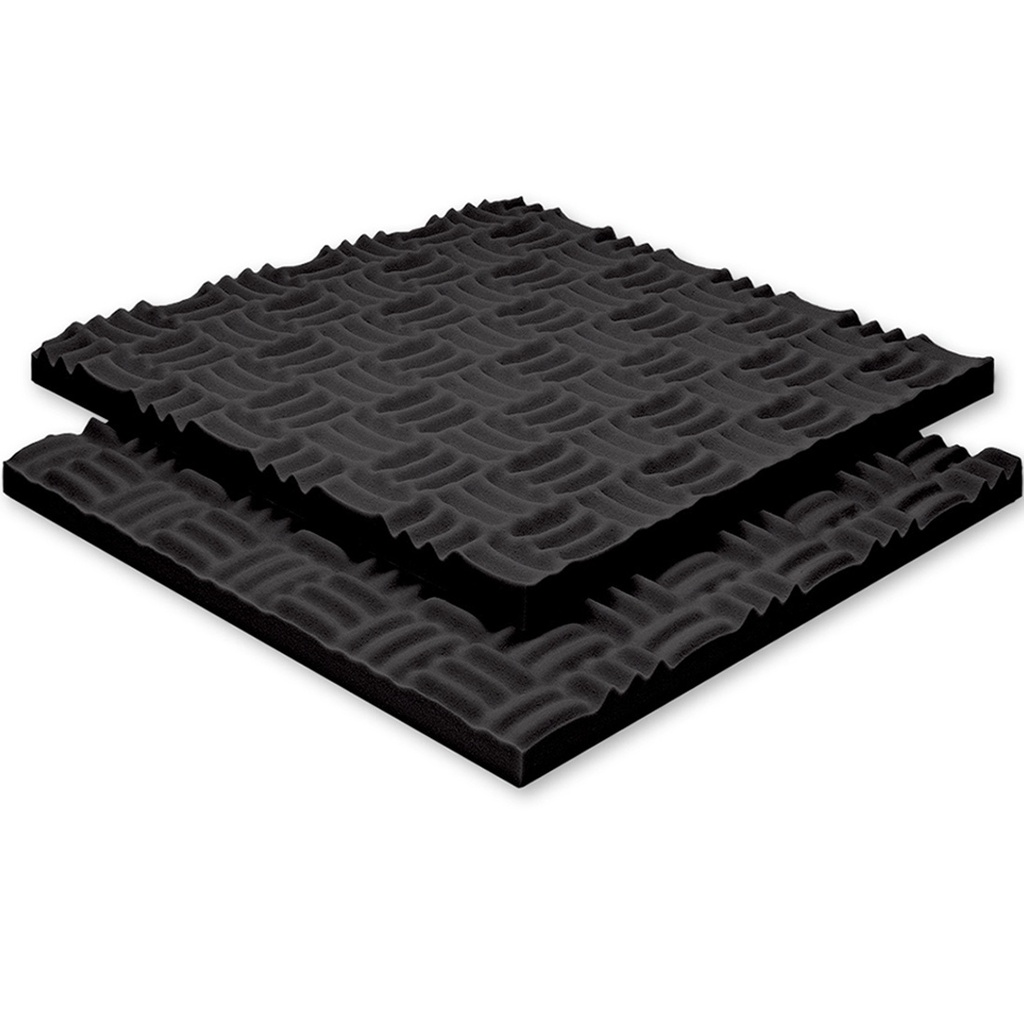
Sonex tiles have an anechoic wedge profile and come in 38, 50 or 75mm thicknesses. Phonik tiles and sheets are 50mm thick. The convoluted sheet measures 50mm at the peak and 25mm in the valley. Product pages list density, panel size, pack quantity and fire information, so check the specific option before ordering. Sonex is sold in pairs; Phonik tiles come in packs of 12.
A grid on a ceiling or smaller wall section
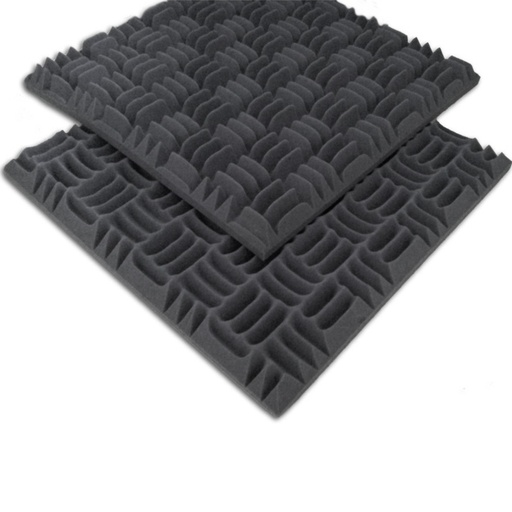
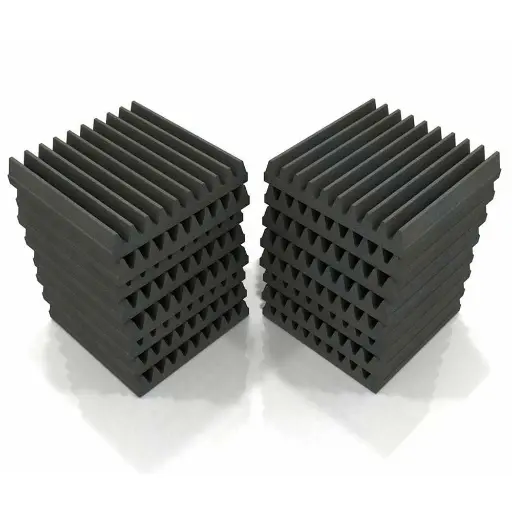
For a grid on a ceiling or smaller wall section, compare Sonex acoustic tiles and Phonik acoustic tiles.
Broader coverage
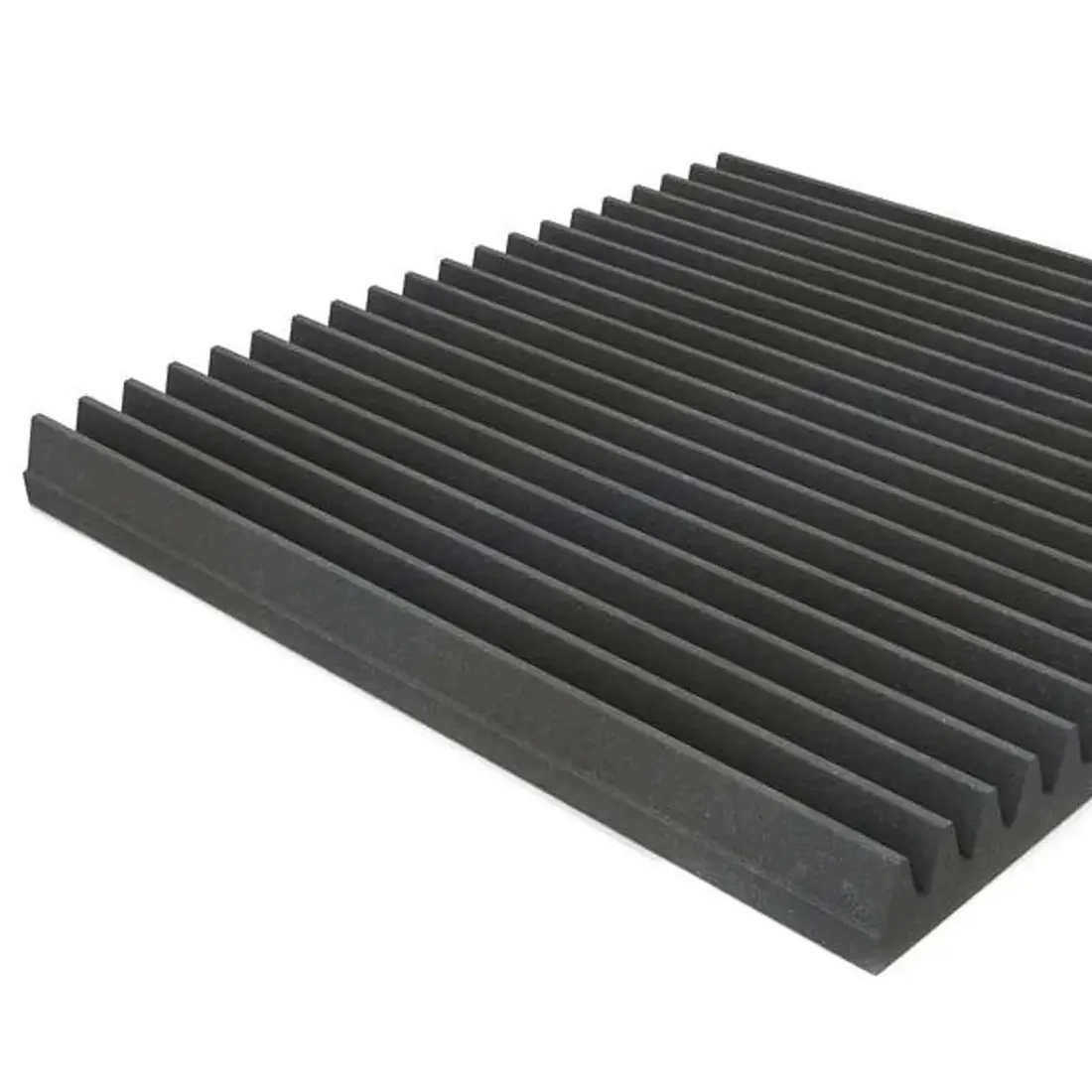
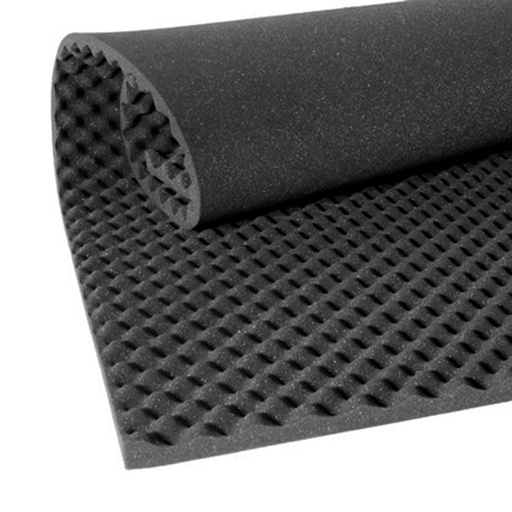
The Phonik acoustic sheet and convoluted acoustic foam sheet suit broader coverage.
Product comparison
| Product | Face profile | Grade | Density | Panel size | Thickness | Fire rating | Sold as |
|---|---|---|---|---|---|---|---|
| Sonex bevelled edge | Anechoic wedge | N28-180 CM2 | 28kg/m³ | 457 x 457mm | 38, 50 or 75mm | Fire retardant (CM2) | Pair |
| Sonex square edge | Anechoic wedge | N28-180 CM2 | 28kg/m³ | 457 x 457mm | 38, 50 or 75mm | Fire retardant (CM2) | Pair |
| Phonik tile | Channelled wedge | FR23-130 | 23kg/m³ | 440 x 440mm | 50mm | Fire retardant | Pack of 12 |
| Phonik sheet | Channelled wedge | FR23-130 | 23kg/m³ | 2070 x 1450mm | 50mm | Fire retardant | Sheet |
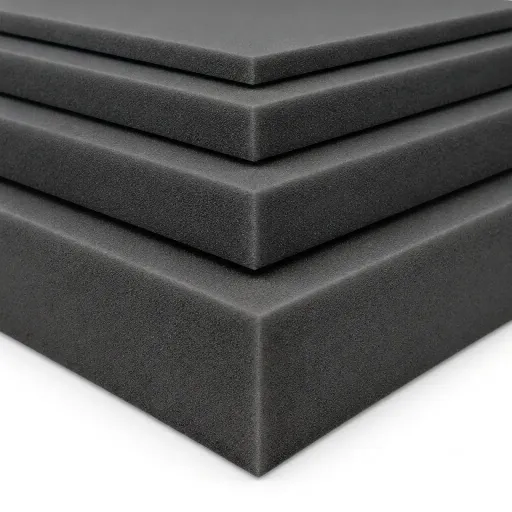
| Convoluted sheet | Convoluted | FR23-130 CM2 | 23kg/m³ | approx 2060 x 1900mm | 50mm peak, 25mm valley | CM2 | Sheet |
| N29-400 | Flat | N29-400 | 29kg/m³ | approx 2060 x 1900mm or cut to size | 12mm to 200mm | None | Sheet or custom cut |
Fitted with clips or an adhesive
Panels can be fitted with clips or an adhesive suitable for both the foam and wall surface. Check the adhesive product details for compatible substrates and follow its instructions. Phonik, convoluted foam and N29-400 are made in Australia and GECA certified. Sonex carries a five-year guarantee. Several lines are special order, so check product availability before planning an installation.
Measure the wall or ceiling
Measure the wall or ceiling before comparing panel coverage, and allow for joins when using sheets. Tiles let you treat selected areas and adjust the layout later. Product listings do not publish absorption figures by thickness, so use room requirements and dimensions when comparing options. Contact us with room dimensions if you need help planning a cut-to-size panel.
Contact us with room dimensions